AWS Summit Amsterdam 2026 Report: Agentic AI and the Challenges of Moving from PoC to Production
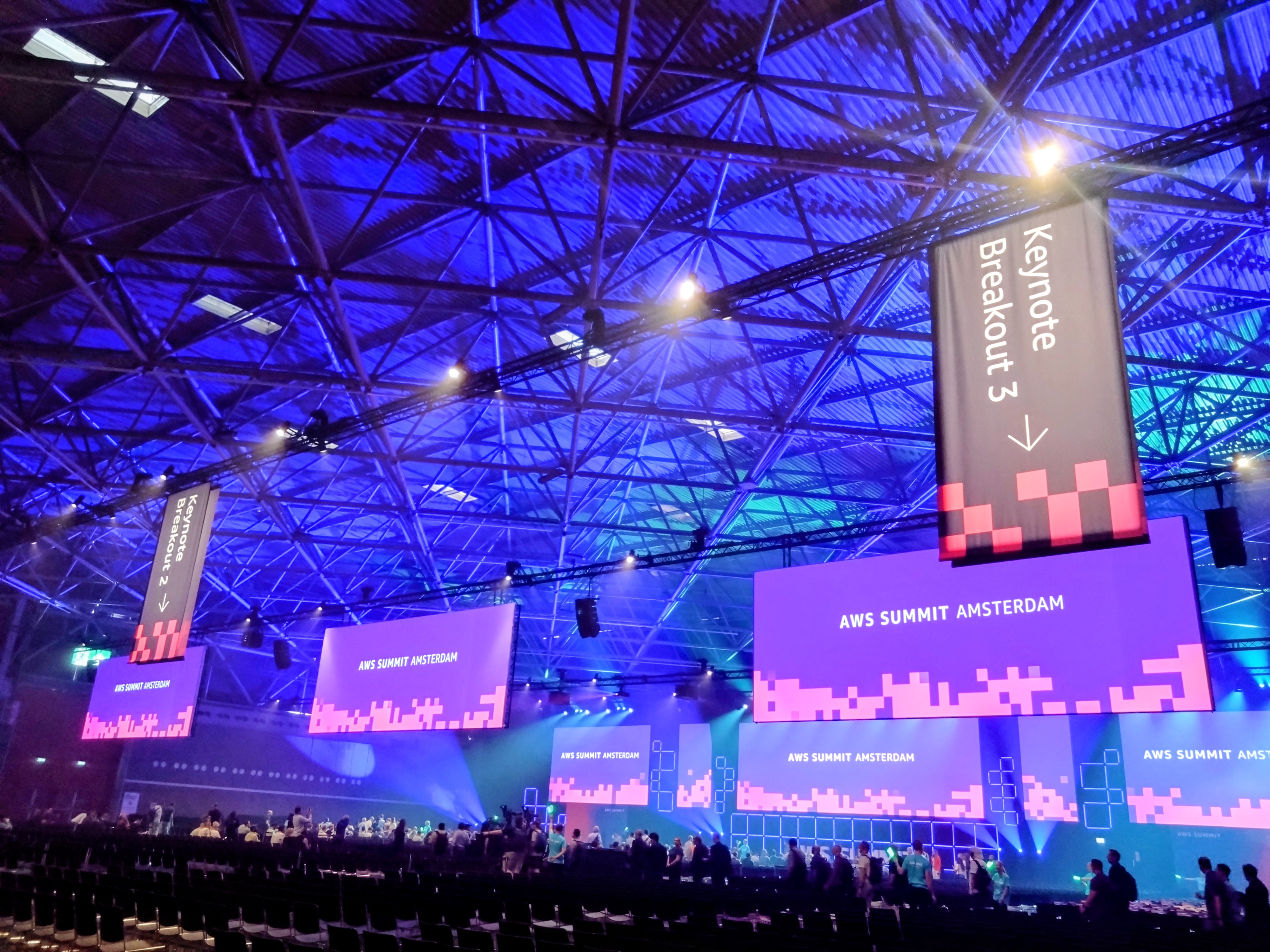
On 27 May 2026, we attended AWS Summit Amsterdam 2026, held at RAI Amsterdam. This year’s Summit covered a wide range of topics, including generative AI, Agentic AI, cloud infrastructure, security, governance, data, and application development. Many sessions focused not only on the latest technologies, but also on how enterprises can bring AI into real business operations. In this article, we share our key takeaways from the event, with a particular focus on Agentic AI, AI security and guardrails, MCP / A2A, and the challenges of moving from PoC to production.Overall Impressions of AWS Summit Amsterdam 2026
Agentic AI is in the spotlight. The question is no longer whether you can build it — it's how you run it.
One of the first things we noticed was that the sessions were already nearly full from 9:00 in the morning. Despite the early start, many participants gathered for the sessions, which clearly showed the strong interest in cloud and AI technologies.
Across the event, AI was one of the most prominent themes. In particular, there were many sessions and exhibits related to Agentic AI, where AI agents autonomously support business processes. What stood out was that the discussions were not limited to how easily AI agents can be built. Many sessions focused on more practical enterprise topics, such as how to deploy AI in enterprise environments, how to design security and governance, and how to move AI initiatives from PoC to production.
The exhibition area also had many booths, with presentations, demos, and opportunities to speak directly with AWS engineers and partner companies. Being able to ask questions directly to AWS Experts was one of the major benefits of attending the event in person.
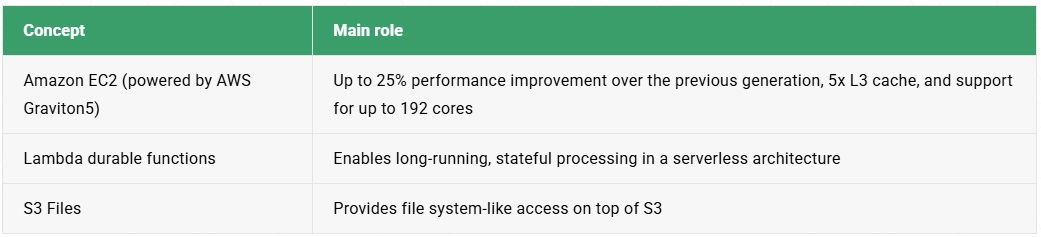
Here are the new services introduced, and we felt the evolution not just of AI applications, but of the entire cloud infrastructure supporting them.
Key Theme 1: Agentic AI and Business Integration through MCP / A2A
AI agents are no longer just chatbots. With MCP and A2A, they're becoming the engine of business workflows.
One of the major themes of AWS Summit Amsterdam 2026 was Agentic AI. Traditional generative AI use cases have often focused on chatbot-style interactions, where a user asks a question and AI provides an answer. With Agentic AI, however, AI agents are moving toward supporting multi-step business processes by connecting with external tools and business systems.
The sessions on MCP (Model Context Protocol) and A2A (Agent-to-Agent) helped clarify how AI agents can become more practical in enterprise environments. A simple way to understand the difference is that MCP connects agents to tools and data, while A2A connects agents to other agents.
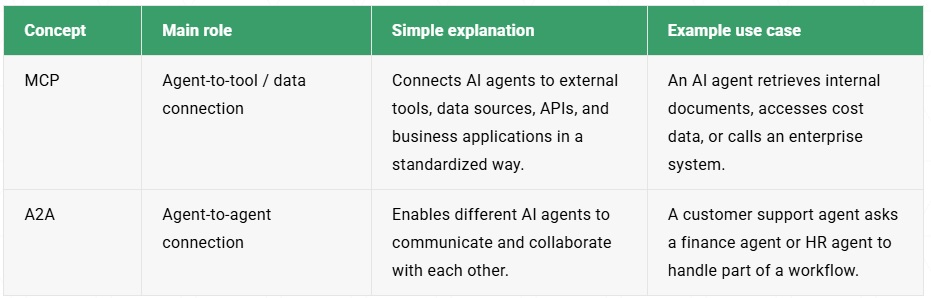
Together, MCP and A2A point toward a future where AI agents are not standalone chatbots, but connected components within business processes. Agents can retrieve information, call tools, trigger actions, and coordinate with other agents to support more practical end-to-end workflows.
Nortable Agent Development Frameworks
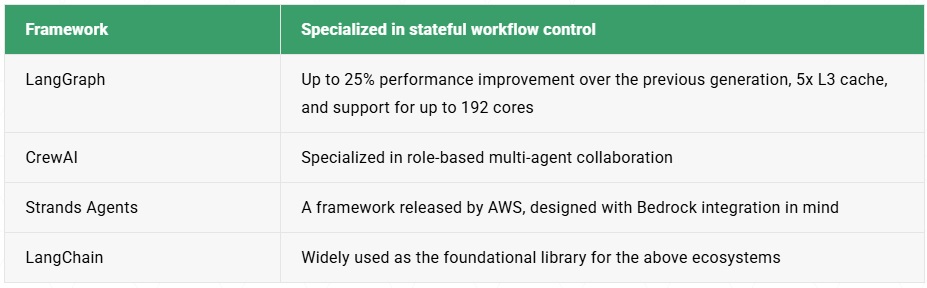
At the same time, as these types of integrations expand, it becomes increasingly important to define what data agents can access, what actions they are allowed to perform, and how their activities are logged and audited.
To make Agentic AI practical in enterprise environments, technical integration must be combined with access control, logging, approval flows, and security review processes.
Another tool that drew attention in this context was Kiro, an agentic IDE developed by AWS. Kiro takes a spec-driven development approach: rather than generating code directly from a prompt, it first produces structured specification documents — requirements, design, and task breakdowns — and then uses those as the basis for code generation. Built on the open-source core of VS Code and powered by Amazon Bedrock, Kiro also supports MCP, allowing agents within the IDE to connect to external tools and data sources. For teams building complex AI applications, this represents a shift from ad-hoc "vibe coding" toward a more structured and auditable development workflow.
Key Theme 2: AI Security and Guardrails for Enterprise Use
Generative AI comes with its own risks — and guardrails are the answer. You don't have to choose between moving fast and staying safe.
As AI adoption expands in enterprise environments, security and governance are becoming increasingly important.
Generative AI applications require different security considerations from traditional web applications. For example, risks such as prompt injection(an attack that hijacks AI behavior through malicious inputs), jailbreak attempts(manipulations that bypass built-in constraints), and the potential exposure of confidential or personal information need to be addressed.
In this context, guardrails are a key concept. They are not a replacement for security architecture or governance, but they can help define and enforce boundaries for AI applications.
For example, guardrails can help restrict inappropriate content, reduce undesired topics, and handle sensitive information such as personally identifiable information (PII) in model inputs and outputs.
Hands-on with Amazon Bedrock Guardrails
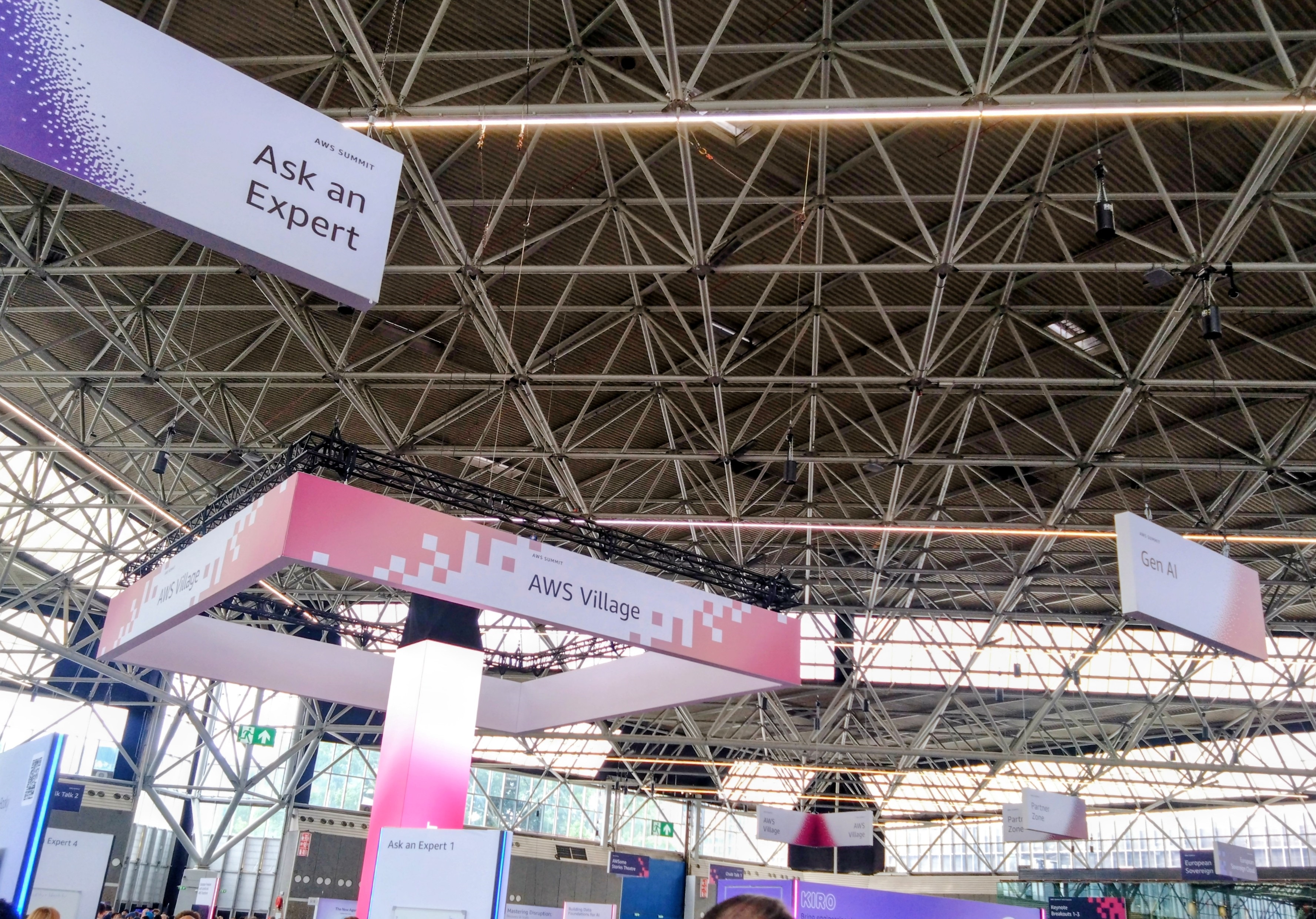
At the event, we had the opportunity to ask an AWS Expert directly about Amazon Bedrock Guardrails. Amazon Bedrock Guardrails is a feature that allows you to configure safety guardrails for generative AI applications, with the following settings available.
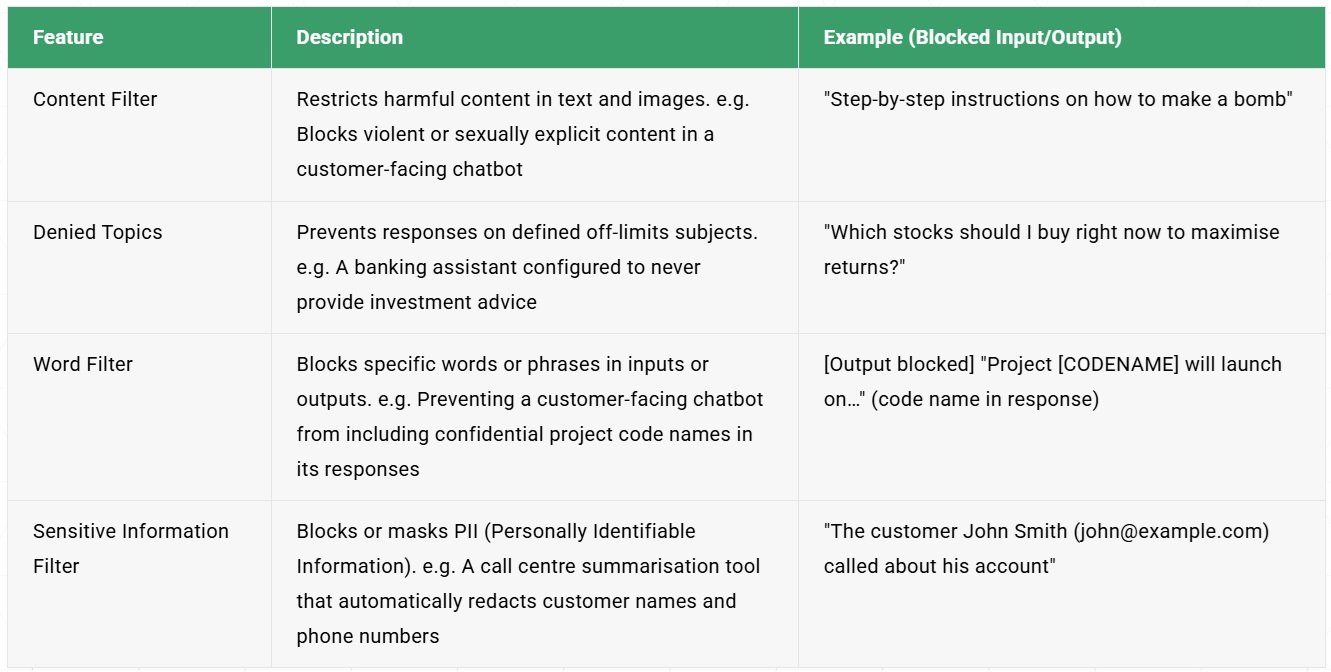
While looking at the actual configuration screen together, we were able to confirm how guardrails can be configured, how test results can be reviewed, and how PII can be blocked or masked.
the actual configuration screen helped us gain a more concrete understanding of how guardrails can be designed and tested.
Another memorable message from the sessions was “Move fast, with guardrails.”
For AI adoption, speed and safety should not be treated as a simple trade-off. Instead, companies need to move quickly while putting appropriate guardrails in place.
Key Theme 3: Moving from PoC to Production
Building a demo has become easy. The hard part is delivering value safely and continuously in production.
Another important topic throughout the Summit was how to move AI agents from Demo / PoC to Production.
Today, it has become much easier to create demos using generative AI and AI agents. However, building something that works as a demo is very different from operating it safely and continuously in an enterprise environment.
Running AI in production requires careful attention to operational design, including the following considerations.
- Evaluation metrics: How to define metrics for measuring response quality
- Test data preparation: How to prepare test data and what cases need to be covered
- Operations and maintenance structure: How to prepare test data and what cases need to be covered
- User feedback integration: How user feedback will be collected and reflected in improvements
- Cost and model selection: Continuous review of accuracy, latency, cost, data protection, and available regions Across the sessions, it was clear that the transition from PoC to production is a common challenge for many companies.
As AI agents become easier to build, the next challenge is how to operate them securely and continuously while delivering business value.
This is where IT partners can play an important role by connecting business requirements, cloud infrastructure, AI applications, security, and operational design.
Conclusion: Practical AI and Cloud Adoption in Europe
AWS Summit Amsterdam 2026 showed that Agentic AI is moving beyond PoC and chatbot-style use cases into production environments and real business operations.What stood out was the maturity of the discussion. Many sessions focused less on “what AI can do” and more on how to operate AI responsibly at scale, covering topics such as access control, guardrails, evaluation metrics, data protection, and operational readiness.
For companies still in the exploration phase, the key message was clear: building AI demos is becoming easier, but running AI in production remains challenging. To close this gap, companies need to design across business requirements, security, data, evaluation, and operations.
For companies in Europe, including Japanese enterprises, this reinforces the importance of adopting AI not only as a technology initiative, but as part of a secure, governed, and practical business transformation.
As a technology partner based in Europe, we aim to support practical cloud and AI adoption with security and governance in mind.
Key Takeaways from This Summit
The barrier to building an AI demo has never been lower. Yet the barrier to running AI in production remains high. Bridging this gap requires a design approach that spans business requirements, security, data, evaluation, and operations.
The barrier to building an AI demo has never been lower. Yet the barrier to running AI in production remains high. Bridging this gap requires a design approach that spans business requirements, security, data, evaluation, and operations.
If you have any questions or inquiries regarding this news article, please contact us via our contact page.
Contact | ID Europe B.V. (idnet.co.jp)